Hello! I'm David Qu - Medical AI Research Engineer 🧠⚕️
Welcome to my digital space! 👋 I’m David Qu, and I’m thrilled to share my journey at the intersection of computer science and healthcare innovation.
🎓 Who Am I?
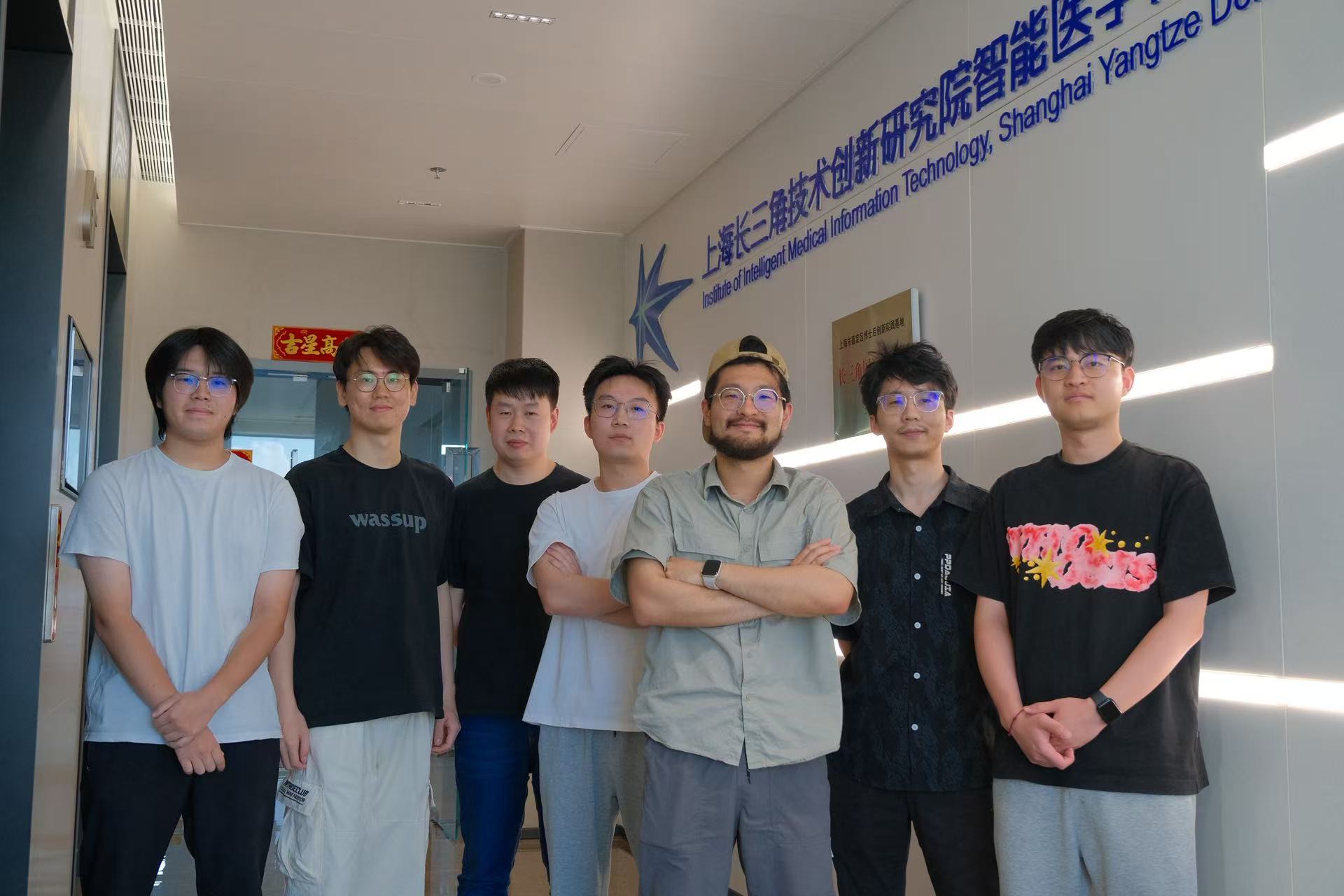
I’m a 4th-year Computer Science Specialist in Software Engineering at the University of Toronto Scarborough, currently working as an AI Algorithm Engineer at Yangtze River Delta Guozhi Intelligent Medical Technology in Shanghai. My passion lies in revolutionizing healthcare through cutting-edge artificial intelligence solutions.
🏆 Academic Excellence
- 📚 Dean’s List Student (2021-2024) - Consistent academic excellence
- 🎯 President’s Scholar - $10,000 scholarship recipient
- 📊 GPA: 3.35/4.0 in a highly competitive program
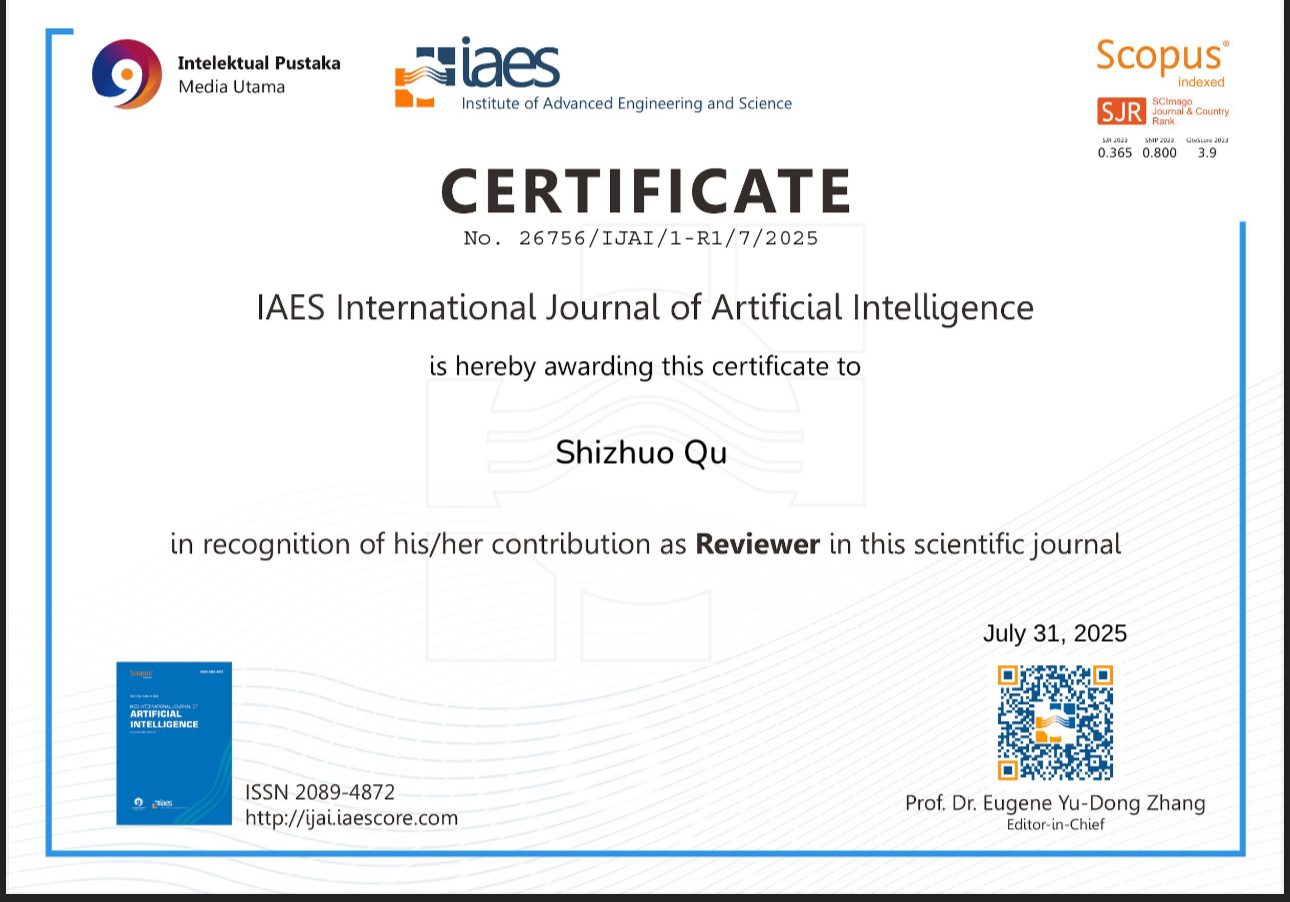
- 📝 Published Research - Contributing author on neural network architecture improvements
- 💻 University Association - (2025-2026) Director of Computer Science in AMACSS
💼 Professional Journey
🧠 Latest Role: AI Algorithm Engineer
January 2025 - August | Shanghai, China
At Yangtze River Delta Guozhi Intelligent Medical Technology, I’m making real-world impact:
- 🏥 Deployed AI solutions at Huashan Hospital (Fudan University affiliate)
- 📈 Achieved 3% improvement in classification Dice scores with novel multi-branch neural network
- 🔬 Specialized in: CT organ segmentation, AMD detection, H&E histology classification
- 🧬 Innovation: Designed ViT-CNN hybrid architecture with multi-head self-attention
💾 Previous Experience: SQL Database Developer
January 2023 - August 2023 | York Region District School Board
- 📊 Completed 5+ independent projects with excellent evaluations
- 🎯 Specialized in data extraction, processing, and systems integration
- 📚 Managed complex educational data systems
🛠️ Technical Expertise
Programming Mastery
1 | tech_stack = { |
🔬 Research Specializations
- Medical Image Analysis - Advanced computer vision for clinical applications
- Deep Learning for Healthcare - Neural networks saving lives
- Vision Transformers - Cutting-edge architecture research
- RAG Systems - Retrieval-Augmented Generation for medical knowledge
- AI Agent Frameworks – Hands-on experience with CrewAI, LangChain, and MCP (Model Context Protocol) for multi-agent collaboration and tool orchestration
- Scalable AI Systems – Building enterprise-ready pipelines with robust APIs and modular architectures
🚀 Current Projects & Research
🏥 Rare Disease AI Diagnosis System (Summer 2025)
Developing a revolutionary RAG-powered clinical decision support system:
- 🔬 Innovation: Combining RAG + LLM for rare disease clinical support
- 📚 Data Source: Integrated PubMed biomedical literature
- 🏭 Deployment: Enterprise-ready Dify workflow system
- 🎯 Impact: Supporting real-world clinical decision making
🧬 Multimodal PD-1 Gastric Cancer Model (Winter 2025)
Contributed to deep learning algorithm development using whole-slide pathological images (WSI) for predicting PD-1 treatment response in gastric cancer.
- 🔬 Breakthrough: Whole-slide pathological image analysis (WSI)
- 🎯 Application: Predicting PD-1 treatment response in gastric cancer
- 🏭 Architecture: Advanced HoVerIT implementation
- 📋 Status: Patent preparation phase
🤖 Multi-Agent Rehabilitation Diagnosis System (Summer 2025)
Building a collaborative AI-driven outpatient diagnostic workflow for rehabilitation medicine:
- 🔍 Core Framework: CrewAI multi-agent system leveraging A2A protocol and LangChain
- 🧠 LLM Integration: RAG-based medical knowledge for accurate and context-aware reasoning
- 👥 Agent Roles: Initial triage, diagnosis, patient interaction for completeness, quality control, treatment planning, and case summarization
- 🏥 Use Case: Full outpatient diagnostic pipeline for rehabilitation departments
- 📋 Status: Final development phase, expected completion this week
📝 Published Research
“Exploring Architectural Enhancements for HoVer-Net: Deep Learning- based Method of Automated Nuclear Segmentation and Classification.”
- 📄 ORCID: https://orcid.org/0009-0005-6014-0026
- 🔗 Link: https://doi.org/10.20944/preprints202506.1228.v1
- 🧠 Contribution: Novel improvements to nuclear segmentation and classification
- 🔬 Domain: Medical image analysis and computer vision
- 📈 Impact: Enhanced accuracy for automated histopathology
🎯 What Drives Me
1 | class MyPassion: |
🤝 Let’s Connect & Collaborate!
I’m always excited to connect with fellow researchers, healthcare professionals, and AI enthusiasts. Whether you’re interested in:
- 🔬 Medical AI research collaborations
- 📝 Academic paper co-authorship
- 🚀 Healthcare technology startups
- 💻 Open-source medical AI tools
📧 Get In Touch
- University Email: davidsz.qu@mail.utoronto.ca
- Personal Email: davidqu0921@outlook.com
- LinkedIn: David Qu
- GitHub: @davidqu921
- Phone: +1-437-350-1922
🌟 Fun Facts About Me
- 🥭 Quirky Fact: I avoid mangoes like my models avoid overfitting!
- 👨🏫 Teaching: Led comprehensive review sessions for 100+ students
- 🏆 Recognition: Served as UTSC AMACSS Course Representative for CSCA08, CSCB07 and CSCC37 Final Review Seminar
- 🌍 Global Perspective: Working internationally while studying in Toronto Canada
- 🏸 Badminton Enthusiast: Founder and active player of an independent badminton club.
🔮 Looking Ahead
As I continue my journey in medical AI, I’m focused on pushing the boundaries of what’s possible at the intersection of computer science and healthcare. My goal is to develop AI systems that not only demonstrate technical excellence but also create meaningful impact in clinical settings.
Ready to innovate healthcare AI together? Let’s build the future! 🚀🏥
“Transforming healthcare, one neural network at a time” - This isn’t just my tagline; it’s my commitment to leveraging technology for human wellbeing.
Thank you for taking the time to learn about my journey. I look forward to connecting with you and exploring how we can collaborate to advance the field of medical AI!
Next Posts Coming Soon:
- 🔬 Deep Dive: How Vision Transformers Are Revolutionizing Medical Imaging
- 🏥 Case Study: Deploying AI at Huashan Hospital - Lessons Learned
- 📊 Tutorial: Building RAG Systems for Medical Literature Analysis